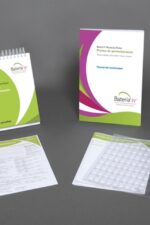
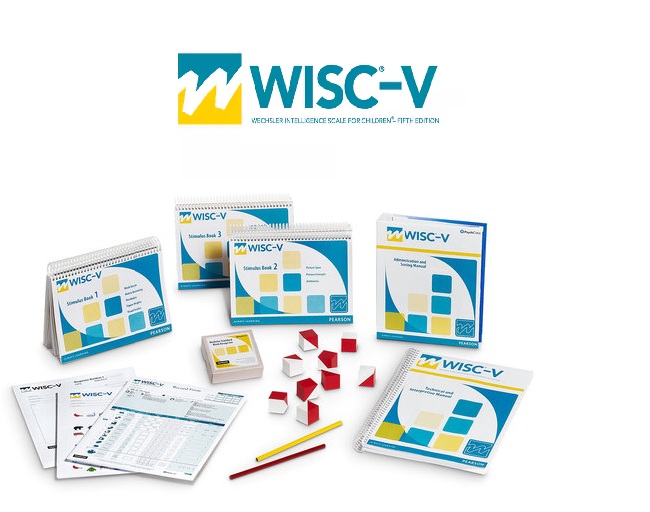

The WISC-V Spanish provides flexibility and interpretive power, along with access to new subtests, to deliver a broader view of a child’s cognitive abilities.
Benefits
- Identify intellectual disabilities and diagnose learning disabilities/disorders.
- Evaluate cognitive processing strengths and weaknesses.
- Assess for giftedness or the impact of brain injuries.
- Use separate visual spatial and fluid reasoning composite scores for greater interpretive clarity.
- Minimize cultural bias across multiple regions of origin using validated and updated test items.
- Access optional language-environment verbal score adjustments.
Features
The WISC-V Spanish increases construct coverage without increasing testing time so you get a more efficient, developmentally appropriate measure — and still have time to assess other domains of interest.
- Simplified instructions with reduced vocabulary level, shorter discontinue rules, and refined scoring criteria.
- Significantly reduced testing time to obtain the FSIQ.
- Expanded score analysis approach highlights index-level and subtest-level strength and weaknesses analyses.
- Updated normative sample standardized on 2,200 children aged 6:0–16:11 whose primary language is Spanish and who have attended schools in the U.S. for less than 5 consecutive years.
- Equated to the English normative sample using IRT approach.
- Includes additional validity evidence based on Spanish-speaking clinical and validity samples.
Primary Index Scales
- Verbal Comprehension Index (VCI)
- Visual Spatial Index (VSI)
- Working Memory Index (WMI)
- Fluid Reasoning Index (FRI)
- Processing Speed Index (PSI)
Ancillary Index Scales
- Verbal (Expanded Crystallized) Index (VECI)
- Expanded Fluid-3 Index (EFI-3)
- Quantitative Reasoning Index (QRI)
- Auditory Working Memory Index (AWMI)
- Nonverbal Index (NVI)
- General Ability Index (GAI)
- Cognitive Proficiency Index (CPI)